What Happens During Physical Therapy & Occupational Therapy?
Before you begin your physical and occupational therapy program, you may wonder what your sessions will be like. What kind of exercises and treatments will you participate in? How physical and demanding will it be?
Luckily, our associates will answer those questions when you arrive to help you feel welcome, informed, and prepared. But we wanted to give you a head start by providing just a few of the most common activities and modalities you may use during your rehabilitation program to achieve your independence goals.
What You'll Do in Physical Therapy
After your physical therapist assesses your condition and determines your level of function, they will create a therapy plan tailored to your specific needs. Then you will participate in therapy sessions at a pace deemed appropriate for you. The following are common exercises and activities you will likely participate in during your rehabilitation:
Balance and Coordination Exercises
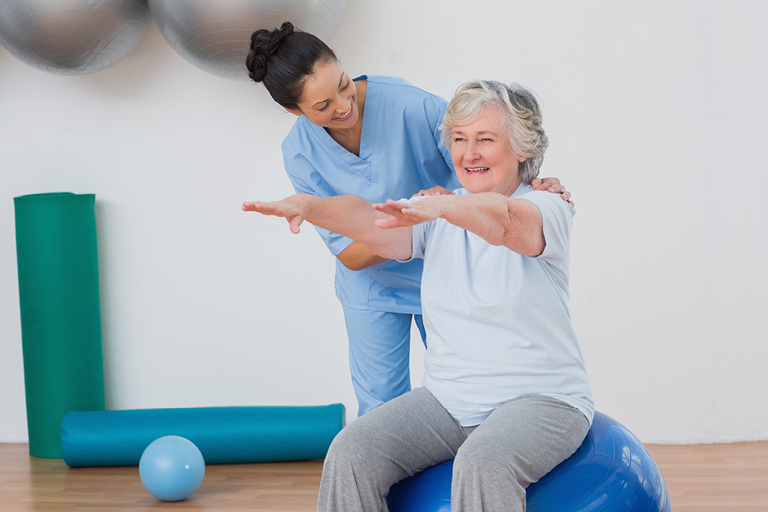
These may include activities such as assisted lunges, squats, stability ball exercises, leg balancing, and using special equipment like the Biodex® Balance System™.
Gait Training
Also known as “walking re-education," gait training focuses specifically on improving strength, balance, and coordination associated with walking. The training may involve parallel bars, harnessed treadmill walking, heel raises, toe raises, or seated marching.
Breathing Techniques
Since breathing influences all aspects of movement, you may perform some deep breathing exercises (diaphragmatic breathing) while sitting, standing, and lying down, and during various physical activities.
Strength Training
You may perform several resistance exercises using body weight, free weights, resistance bands, medicine balls, or weight machines to rebuild your strength.
Flexibility and Range of Motion Exercises
These exercises are a great way to assess and improve how far you can extend your joints and muscles and may include flexion and stretching exercises, such as finger and wrist extensions, shoulder rotations, and neck stretches.
What You'll Do in Occupational Therapy
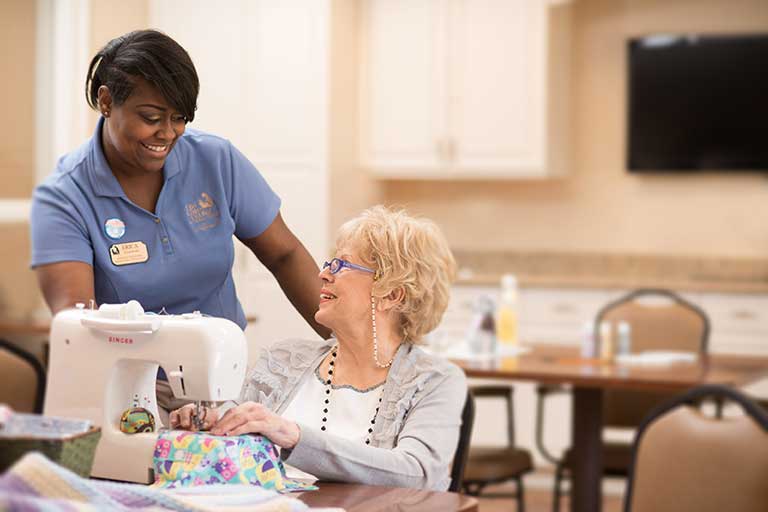
Occupational therapy will address your ability to perform self-care tasks and daily living activities without assistance, which will prepare you for your dishcarge back home. Here are a few things to expect:
Performing Daily Living Activities
From cooking and cleaning to getting in and out of a car, you may practice activity and self-care simulations to assess and improve your ability to live on your own. Many therapy gyms have common household appliances and room staging to give you a realistic learning environment.
Adaptive Equipment Training
Sometimes patients require adaptive equipment to perform certain daily activities and care tasks. During your program, you may learn to use devices such as reachers and grabbers, bathing and toilet aids, mobility aids, or special eating utensils.
Living Space Adjustments
Your therapist may provide guidance on ways to change your living space to be safer and more efficient. This may involve adaptive equipment installation, rearrangement of furniture, eliminating fall hazards, and increasing accessibility of needed items.
Functional Cognition Exercises
Depending on your situation, your therapist may implement memory and cognitive exercises intended to improve your ability to manage daily life demands, such as bills, meal planning, and general scheduling.